I led the co-design of an indoor navigation app for the blind.
User Research
Overview
Client: Clew Navigation
Industry: Assistive Tech for the blind
Timeline: 10 weeks (July 2023, June 2024)
My Role: User Experience Strategist
Clew is an accessible navigation app designed to solve the "Last Meter Problem" - bridging the gap between a vehicle (e.g., an Uber) and a building’s specific entrance, as well as navigating indoor spaces (e.g., finding a bathroom) without requiring assistance. Following the initial development, the challenge was twofold: ensuring the UX was intuitive for visually impaired users, and determining a sustainable business model that would not financially burden a demographic with statistically higher unemployment rates.
The Goal: Design a highly personalized onboarding experience and validate product-market fit for a broader commercial launch.
The Challenge: Transitioning an academic research project into a viable product while balancing necessary revenue with the economic realities of the disability community.
Skills & Tools
Core Methodologies
Participatory Design (Co-Design)
Customer Discovery (NSF I-Corps)
Focus Group Facilitation
Large-Scale Qualitative Synthesis
Design & Strategy
Onboarding Flow Design
Product-Market Fit Analysis
Business Model Generation
Accessibility Standards (WCAG)
Domain Knowledge
Assistive Technology (a11y)
The "Last Meter" Problem
Inclusive Economics
Results
Through a two-year engagement spanning design and strategy, I shaped both the product interface and its route to market.
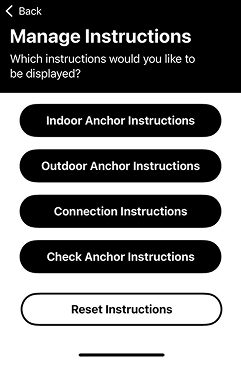
UX Overhaul: I designed a robust Onboarding & System Preferences flow. This allows users to front-load their accessibility needs, ensuring the app adapts to their specific capabilities immediately upon first use.
Strategic Validation: Through the National Science Foundation (NSF) I-Corps program, I validated the product-market fit.
Roadmap Definition: I defined a deployment strategy that bypasses direct costs to the user, ensuring the technology remains accessible while maintaining operational sustainability.
The Process
My work followed a dual-track process: Participatory Design followed by aggressive Customer Discovery.
Phase 1: Co-Design & UX (July 2023) - To ensure the app solved real-world friction, we embedded the community into the design process.
Synthesis: Over five weeks, we synthesized data from 60 user interviews and 10 focus groups.
Team Leadership: I helped lead workshops to train 30 team members in UX best practices, ensuring the engineering team understood the "Why" behind the design decisions.
Execution: We found that users needed granular control over how navigation data was presented. I designed the preferences screen to allow users to toggle between haptic, auditory, or visual cues, and an onboarding flow to teach them how to maximize these features.
Phase 2: Commercial Strategy (NSF I-Corps) - The following year, I focused on the transition from research to market.
Customer Discovery: I conducted over 100 interviews across the US with stakeholders in the assistive tech landscape.
Economic Modeling: We recognized that high poverty and unemployment rates within the disability community made a standard B2C subscription model unethical and unviable.
Strategic Pivot: I used this data to pivot our business case toward B2B or government-subsidized models, ensuring we could get the technology into hands without imposing financial constraints.
Opportunities for Improvement & Expansion
Looking back, I would deepen the integration of hardware and external partnerships:
Venue Partnerships: I would aggressively pursue B2B partnerships with large venues (airports, malls, stadiums). Selling the service to the building rather than the user would solve the revenue problem while improving data accuracy.
Hardware Integration: I would explore integrating with existing wearables (like smart glasses or haptic canes) to move the "Last Meter" feedback off the phone screen and into a heads-up or tactile experience.
Community Ambassador Program: To scale adoption, I would formalize a "Super User" program, empowering early adopters in the blind community to teach others how to use the specific onboarding features I designed.