Redesigning a fractured degree auditing system by consolidating student spreadsheets and legacy databases into a unified visual framework, now being implemented by the college to track graduation progress.
Systems Design
Overview
Client: Olin College of Engineering
Industry: EdTech & Student Information Systems
Timeline: 15 weeks (September - December 2024)
My Role: User Interface Designer
The degree auditing ecosystem at Olin College was fractured and causing significant anxiety. The official Registrar-facing system was archaic and unintuitive, often falsely indicating that students were missing key requirements. To cope, students built their own tracking spreadsheets. However, these were unverified, prone to breaking after the creators graduated, and confusing for Faculty Advisors.
The Goal: Unify the mental model of "Graduation Progress" for students, faculty, and the Registrar.
The Challenge: Bridging the gap between a rigid backend database and the flexible, complex reality of student course planning, while eliminating the "use at your own risk" nature of student-made tools.
Skills
Core Methodologies
Service Design & Workflow Analysis
Usability Testing
Information Architecture (IA)
Stakeholder Alignment
Design & Prototyping
Figma (Web Interface)
Print / Analog Tool Design
Data Visualization
Systems Thinking
Domain Knowledge
EdTech & Student Information Systems
Academic Compliance
Registrar Operations
Results
We overhauled the end-to-end experience by simplifying the information architecture into a shared visual language.
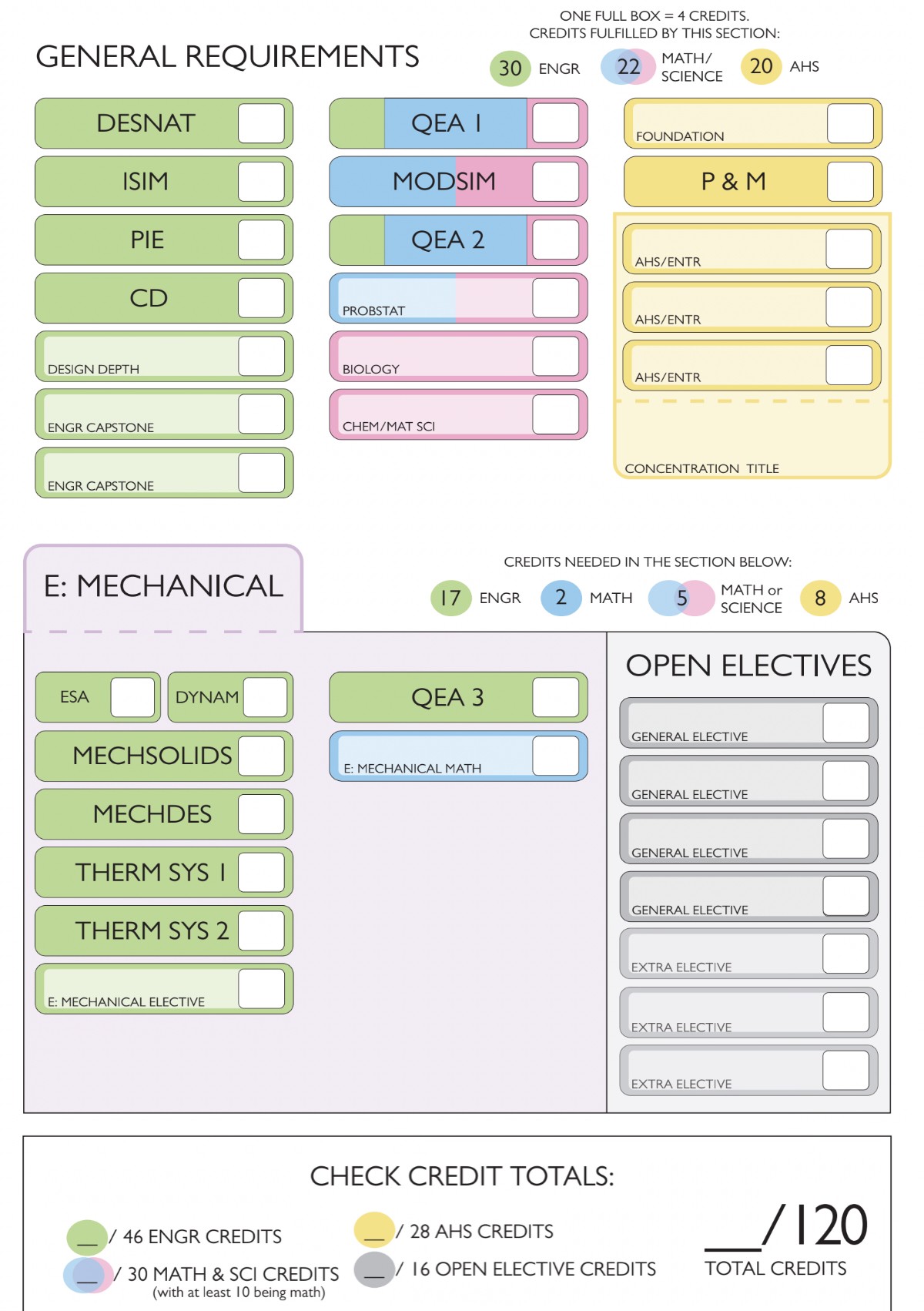
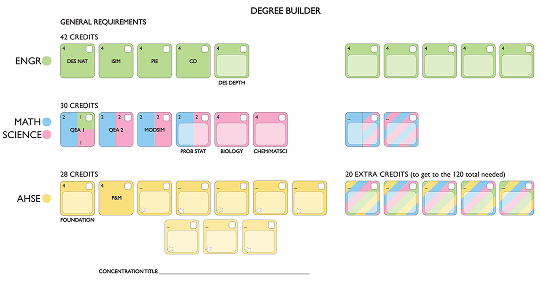
The "One-Page" Planner: We created a physical collaborative tool - a simple handout used during advising meetings. It distills complex prerequisites and co-requisites into a four-color, number-based system.
Alignment: This tool successfully synchronized students and advisors, ensuring both parties were looking at the same data in the same way, eliminating confusion during course planning.
System Integration: The college is currently implementing our visual framework and UI design into the official backend degree auditing system, permanently replacing the legacy interface.
Process
Our process focused on untangling the disconnect between "System Status" and "User Reality."
1. Discovery & Audit We identified two failing parallel systems:
The Internal System: Hard to read, resulting in false negatives (students thinking they were behind).
The Student Spreadsheets: High maintenance, low accuracy, and difficult for advisors to interpret.
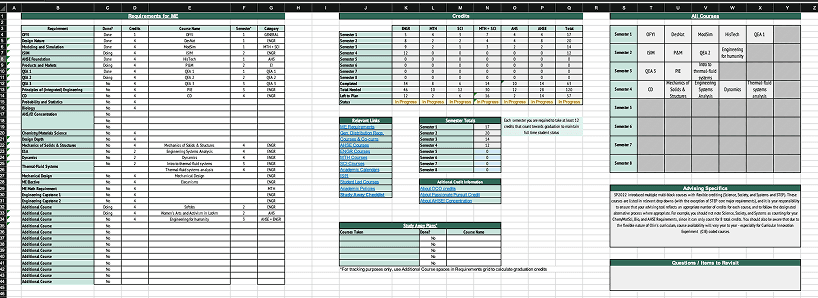
2. Usability Research We conducted usability studies to understand how students and faculty navigated these tools.
Insight: The friction wasn't just technical; it was communicational. Advisors and students spoke different languages regarding requirements.
3. Solution Design & Prototyping
Digital: We developed a Figma prototype for a new web interface that resolved critical navigation issues.
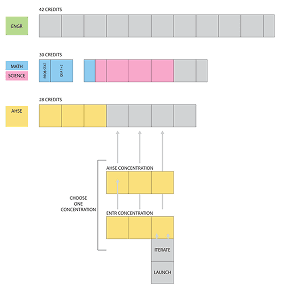
Analog/Service Design: We realized software alone wouldn't solve the interpersonal friction of advising meetings. We developed a simplified visual schema (4 Colors + Number System) that allowed users to instantly visualize missing credits.
Validation: By stripping away the complexity, we empowered users to plan their path to graduation without needing to decode the registrar's database.
Opportunities for Improvement & Expansion
Reflecting on the rollout, I see opportunities to further automate and scale this solution:
Digitizing the Handout: While the physical handout was excellent for in-person alignment, I would prioritize building an interactive digital version that auto-saves to the student's profile, bridging the gap between the paper worksheet and the official database.
Proactive "Nudging": I would introduce an automated notification system based on the new logic (e.g., "You have 2 red blocks left to fill") to encourage students to meet with advisors earlier in the semester.
Historical Data Migration: A major challenge is legacy data. I would plan a robust data migration strategy to ensure the new visual system accurately reflects the records of students who have been using the old spreadsheet method for years.